Thursday, October 24, 2013

Different Genre


Different Genre
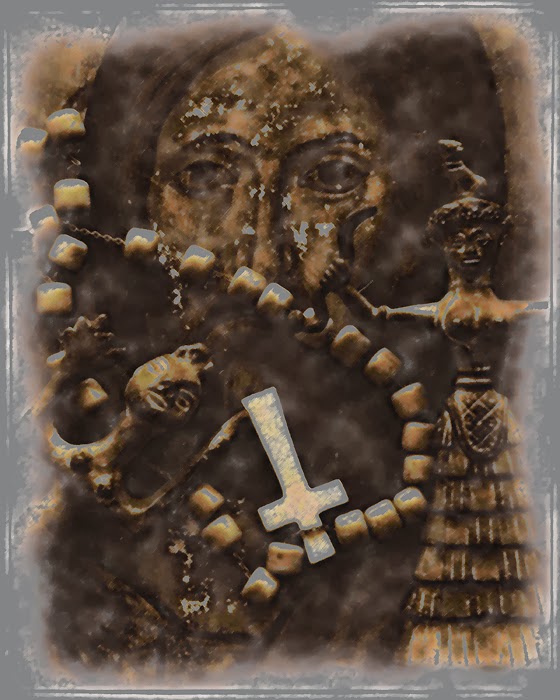
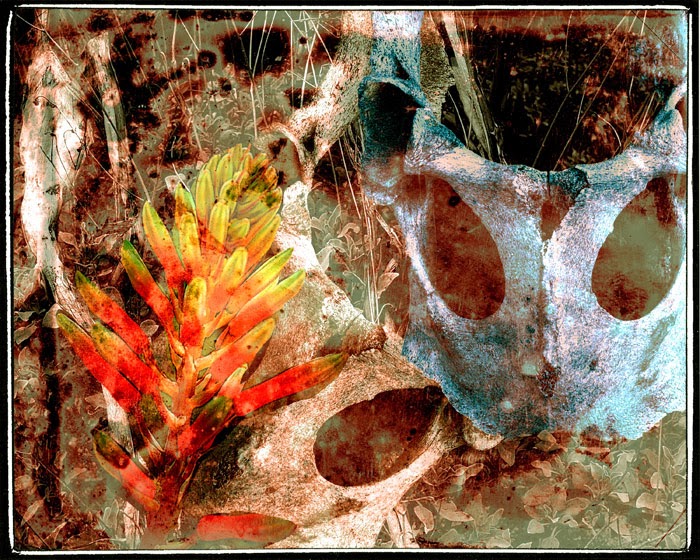
Every now and then I like to change genre –move into an area that is totally alien to my normal shooting mode.  I think all photographers would like to use paints rather than their familiar digital or film medium.  I once attempted to work with watercolor and discovered I did not have the patience to learn or spend the time working the medium.  I envy the painter, who although similar in his method of seeing has much more freedom in creating in paint what he sees, while the photographer is confined to the application of what he sees using various mechanical processes.  However, in an effort to change genre I attempted to apply my understanding of forms and light through abstract manipulation using the digital software process.  The images below were created in Photoshop and the Painter 4 essentials software.  The first three images are collages of two different images, with the fourth and fifth image created solely in Painter 4 from a still lifes I created.


Friday, October 11, 2013

Lines in Photography Part 2


The Line Part 2
The conscious use of lines in a photograph can add depth to a composition.  You can make the most use of lines by keeping your composition simple (see my post on “keeping it simple”).  We commonly think of lines in landscape where the horizon divides the land from the sky or in architecture where the lines are evident in the structure of the buildings.  However, lines can also be seen and used in almost any subject we photograph by using them to direct the eye to the main subject of the image.  Remember lines are not just straight.  They can be curves or combinations of straight and curved (see bowl and spoon below).  Sometimes the line is the subject of the photograph. 

Cameras used Nikon with 12mm Tokina wide angle lens and ProOptic 8mm fisheye lens,  and Sony Nex7 camera with 18-35mm lens 


Thursday, October 3, 2013

Lines in Photography


Lines Part 1
What do you need to know about lines in photography –is that lines are what leads the viewer to the point of most importance.  They are for the most part basically invisible, but can divide picture elements or simply stand alone in a given image.  Lines, of course are most visible in architectural images while subconsciously they are there in other images.  So here are the obvious lines I found around Exit 270.

Camera Nikon D7000, lenses Tokina 12mm-24mm and Pro Optic 8mm Fisheye.  Most images shot at F8, ISO 100-200


Sunday, September 22, 2013

Keeping It Simple


This has been a basic philosophy that I have followed in my photographic endeavors.  What attracts my eye is often the simplicity of some object I see –whether it is something in a landscape or an everyday object that I come into contact with. I endeavor to eliminate unnecessary detail while trying to distill it down to the form, light and composition that attracted me to the subject in the first place.

The following images were shot mostly using window light - and Opteka Close-Up Lens filter +2 to +4 where required.   The camera is a Nikon 7000 with Nikkor 18-70mm lens. Very simple application of basic photographic techniques incorporating ISO, Aperture and a dash of imagination


Monday, September 2, 2013

Faces of Exit 270 Part 2


More faces of the people of Exit 270.  While most of my photographs are of still life, abstracts and various architectural shapes –I do like to step out of this comfort zone and try to captures the faces of the people that I share this exit with.